

Change compared with 31 December 2024: suckler cows ▲ +50 / +1.3% (was 3,773), total animals ▲ +322 / +3.8% (was 8,470).
The Charolais originates from the area around Charolles in Burgundy, central France. For centuries the breed was bred as a draught and beef animal; later it was developed further in the Nièvre region. The herd book was opened in 1864. The Charolais was one of the first continental European beef breeds to spread to Great Britain and America, and is today one of the most important beef breeds in the world.
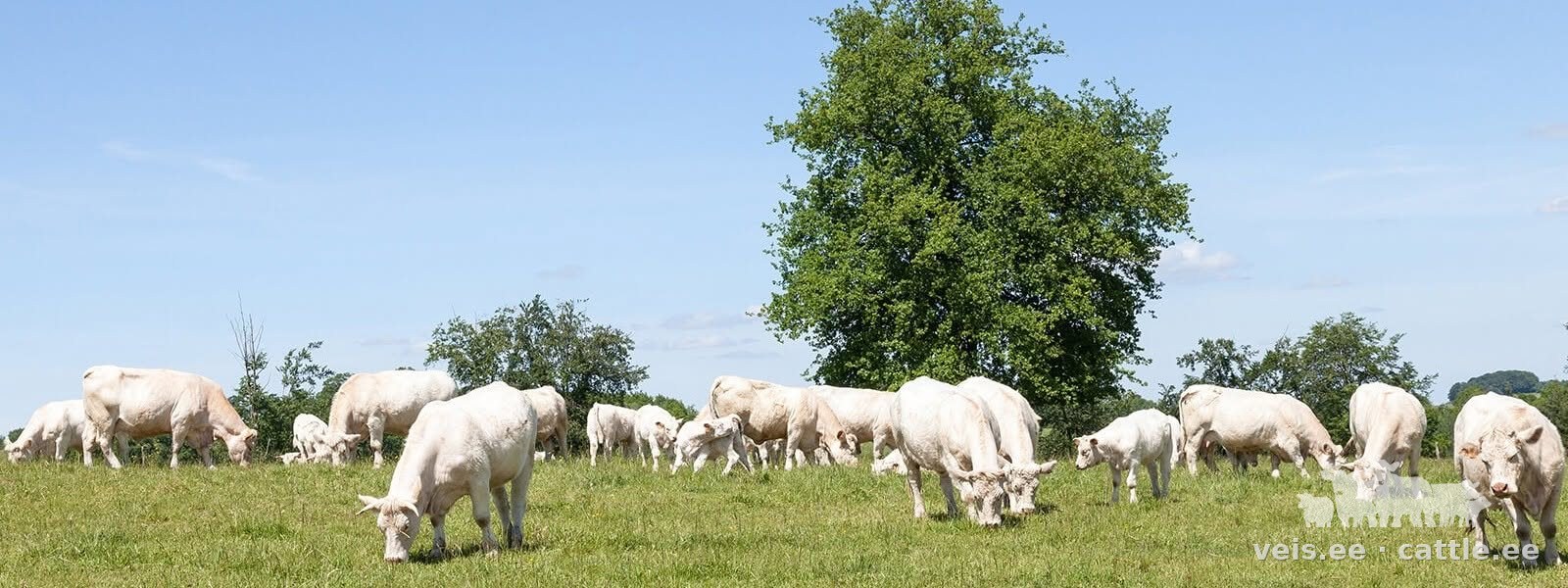
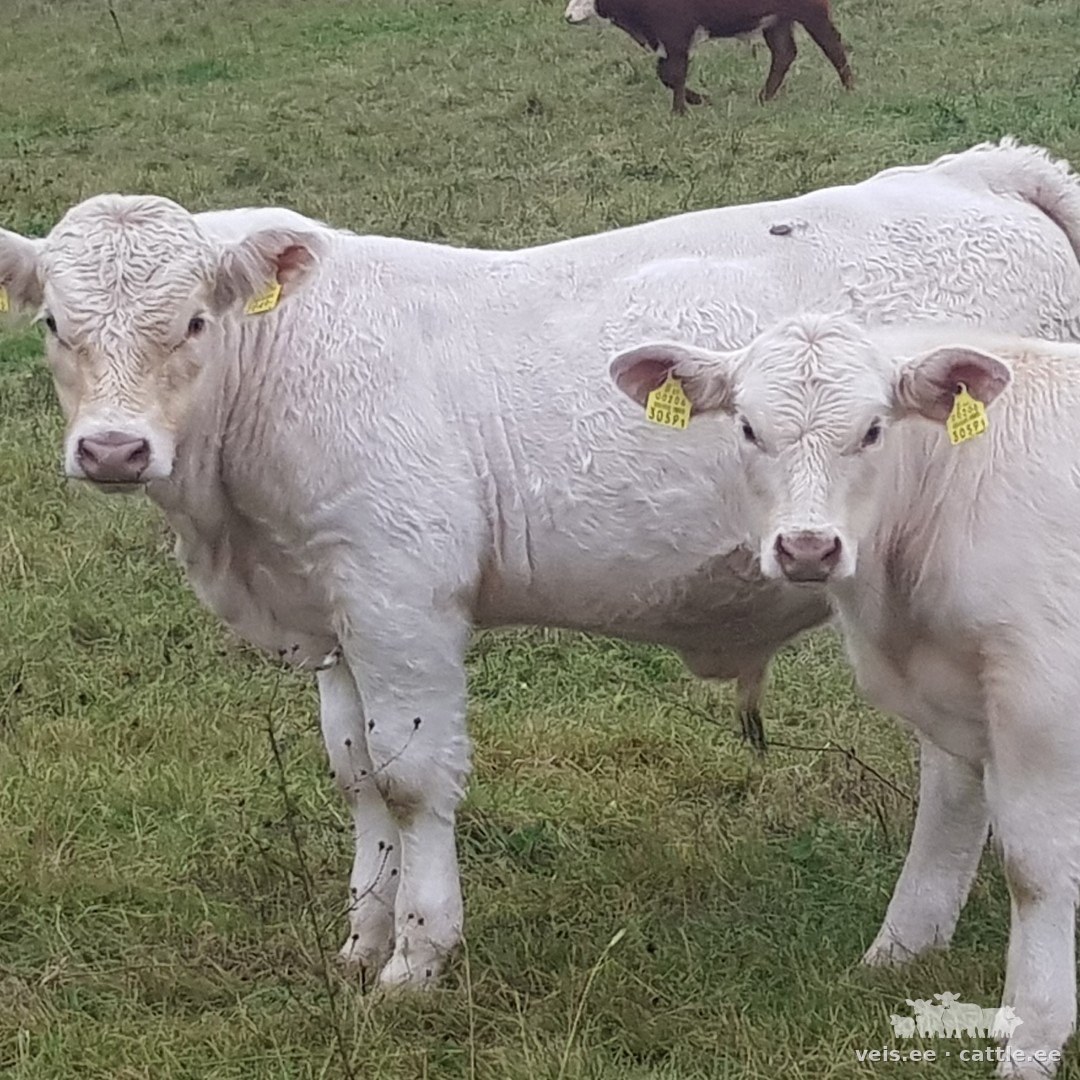
The breed is large-framed, white to cream in colour, with a short, broad head, a long muscular body and strong legs. Both horned and polled animals occur. Charolais stand out for very fast growth and good feed efficiency and are well suited to finishing and to crossbreeding with smaller breeds.
In the past, a drawback of the breed was more difficult calving because of large calves, but breeding has noticeably improved calving ease. Maternal traits are somewhat more modest than in smaller breeds, so good development of heifers before first calving is important. The beef is lean with a high proportion of lean meat.
The first Charolais were brought to Estonia as early as the late 1960s, but consistent breeding of the breed began in 2000, when a breeding bull was bought from Sweden; in 2002 in-calf heifers were brought from Hungary and Sweden.
Key facts
- Origin: France, Charolles (Burgundy)
- Body weight: cows 700–1000 kg, bulls 1100–1400 kg
- Colour: white to cream; horned or polled
- Strengths: very fast growth, large muscle mass, good feed efficiency
- In Estonia since: late 1960s (modern breeding since 2000)