

The Estonian Red breed (EPK), in whose breeding Red Holstein bulls have also been used, numbered 16,772 cattle at the same date, of which 8,756 dairy cows.
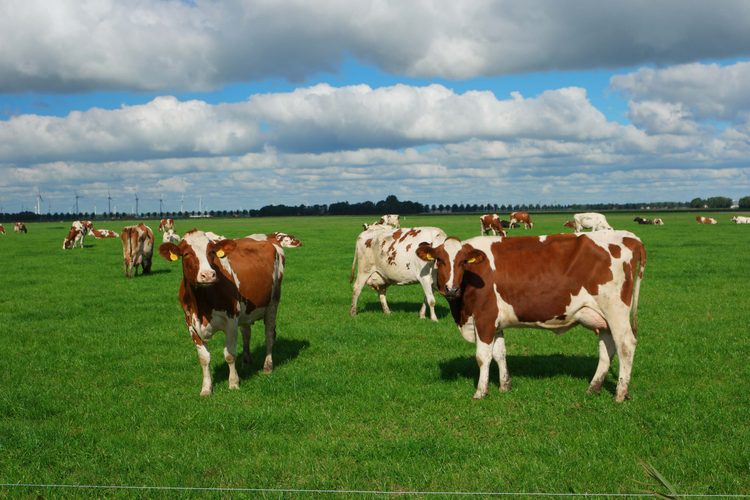
Red-and-white animals have occurred in the Holstein breed from the very beginning, because red coat colour is a recessive trait that can also appear in the offspring of two black-and-white parents. For a long time black-and-white animals were preferred in breeding; later, Red Holsteins began to be bred as a separate line, and today Red Holstein bulls are used all over the world.
According to the breeding programme of the Estonian Holstein breed, Estonian Holsteins are black-and-white or red-and-white, and both red-and-white and black-and-white Holstein are used in pure breeding. In the breeding programme of the Estonian Red herd (EPK), the proportion of red-and-white Holstein blood is recorded separately (code RH) — Red Holstein bulls have been used to raise the milk performance of the Estonian Red herd.
In appearance and use, the Red Holstein is similar to the black-and-white Holstein: a large animal of pronounced dairy type. Bull calves, fattening bulls and cows that have left the herd go for beef; crossing with a beef-breed bull gives calves that grow better and are more valuable on the beef market. We also sell red-and-white Holsteins and their crossbreds for beef.
Key facts
- Origin: Holstein breed (the Netherlands, northern Germany, North America); red-and-white colour variant
- Body weight: same as Holstein – adult cow at least 750 kg (Estonian Holstein breeding goal)
- Colour: red-and-white
- Use: dairy breed; for beef: bull calves, fattening bulls, cull cows and crossbreds with beef breeds
- In Estonia: part of the Estonian Holstein breed (EHF); blood proportion code RH in the breeding of the Estonian Red herd
Sources: breeding programme of the Estonian Holstein breed (PTA), national animal register (31 December 2025).