

Change compared with 31 December 2024: suckler cows ▼ −67 / −1.3% (was 5,215), total animals ▼ −123 / −1.1% (was 11,643).
The Hereford was developed in the 18th century in the county of Herefordshire in western England, where local cattle were bred into an early-maturing beef animal that makes good use of pasture grass. The herd book was opened in 1846 and today the Hereford is found on every continent. In addition to the horned type, the hornless (polled) Hereford is also widespread.
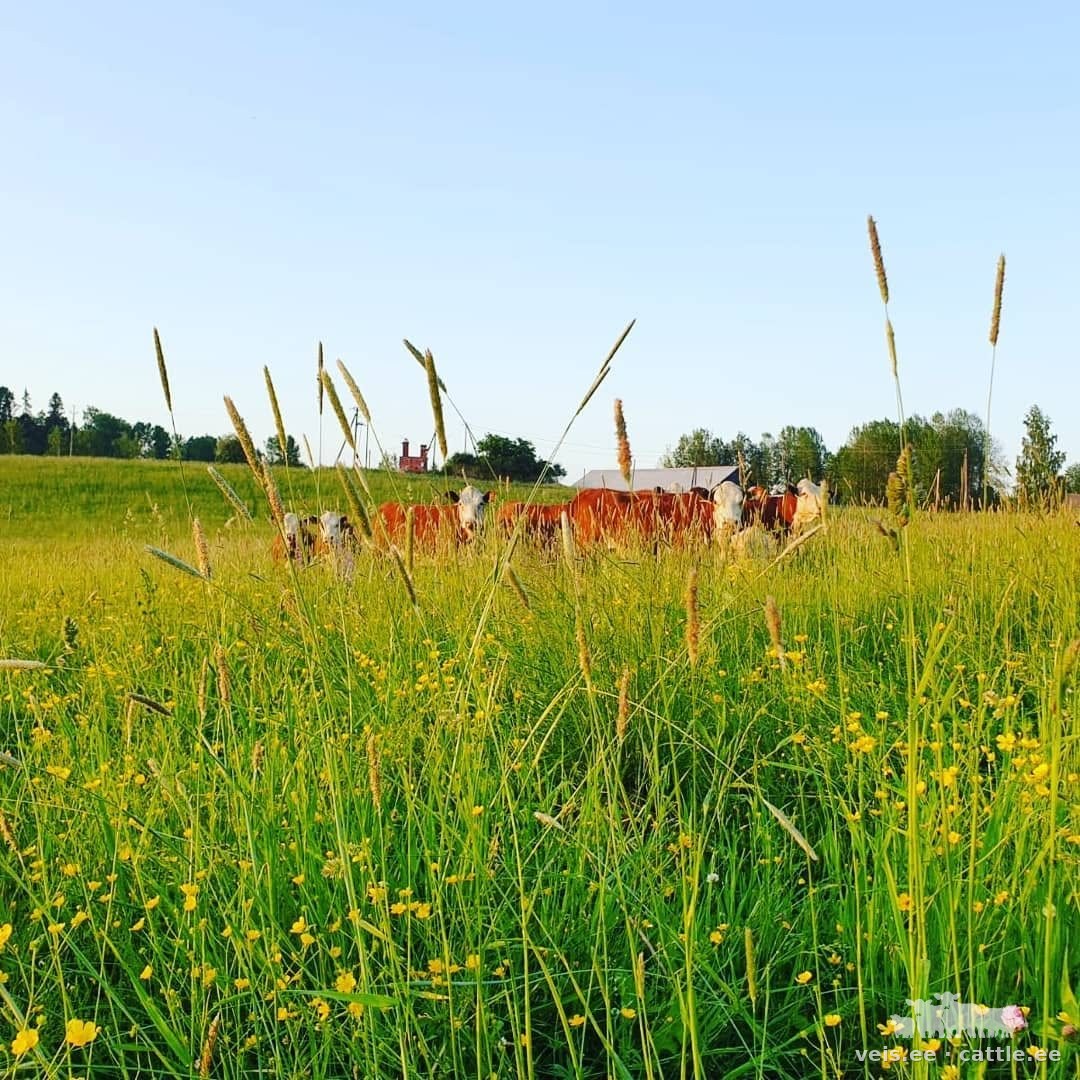
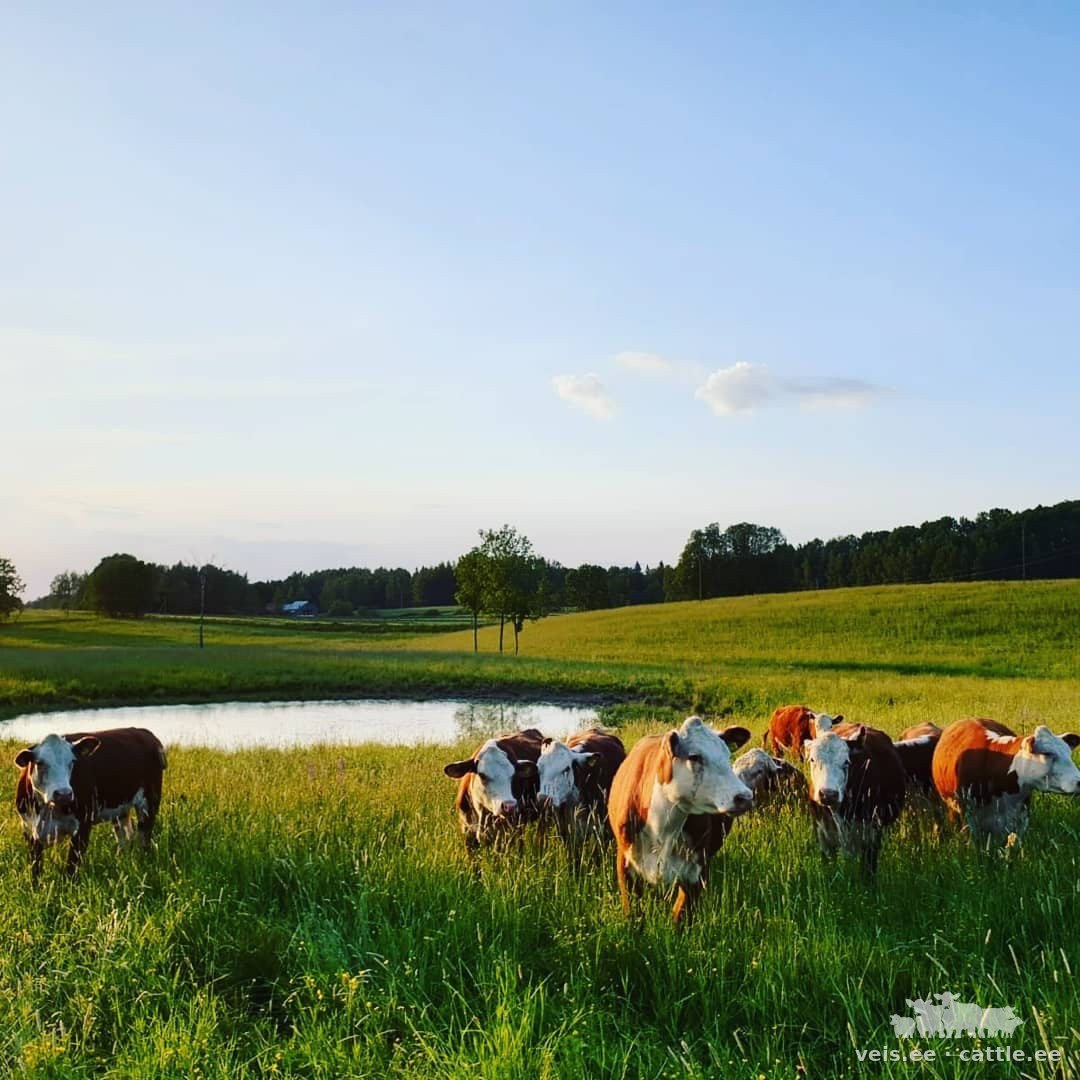
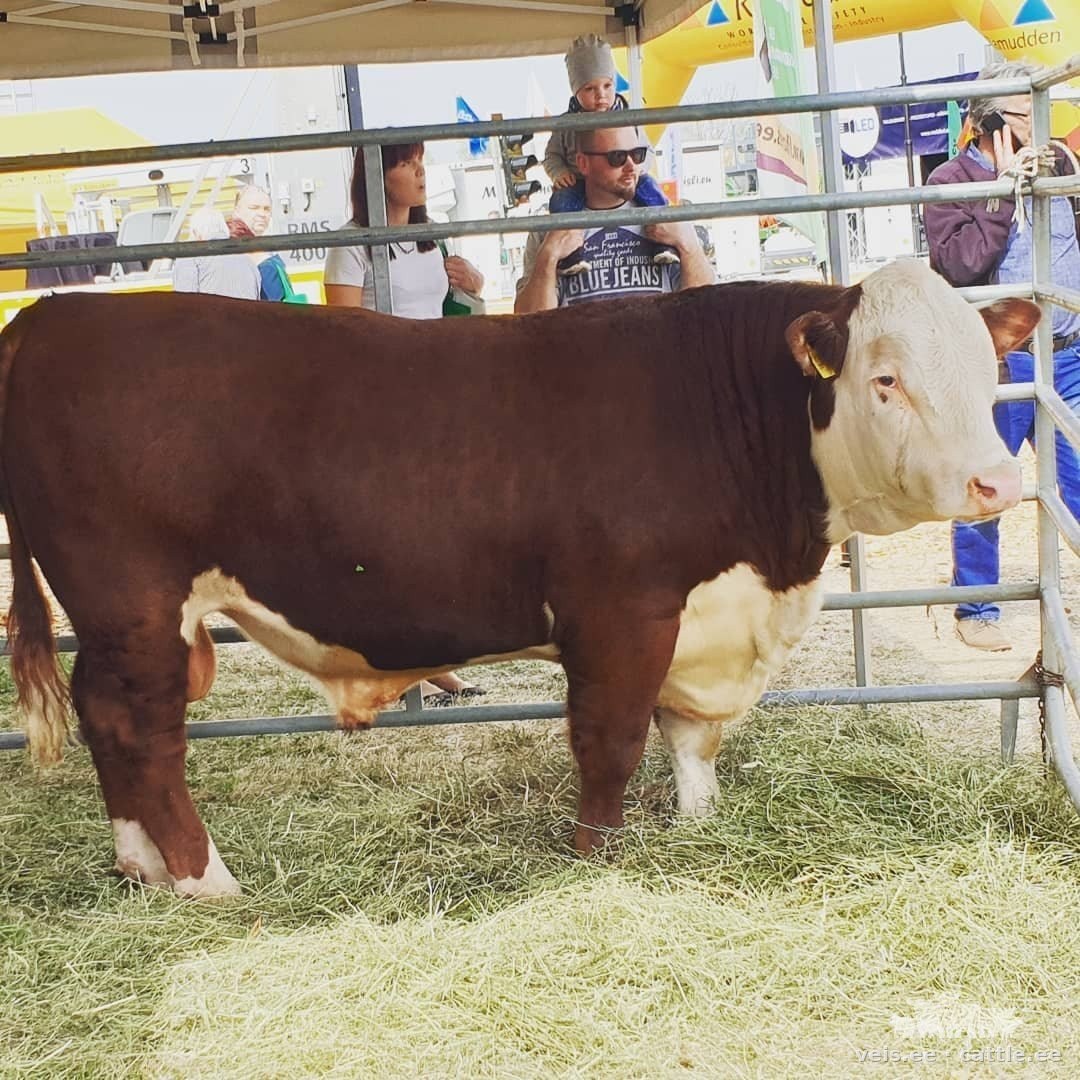
The breed is medium-sized with a dark red coat; the head, the underside of the neck, the belly, the tip of the tail and the lower legs are white. Herefords are friendly and easy to handle, they generally calve easily, and the suckler cows are attentive mothers that stay in the herd for a long time. The breed tolerates a cool climate well and is suited to year-round outdoor keeping and extensive grazing, including the management of semi-natural habitats.
Hereford beef is juicy and well marbled. Young animals lay down fat relatively early, so feeding intensity and slaughter age must be monitored during finishing. In crossbreeding, the Hereford passes a calm temperament and good feed efficiency on to its offspring.
The first Herefords arrived in Estonia in 1978, when young cattle were brought from Belarus and the Mari Autonomous Republic to the Võru and Sõrve state farms. Modern breeding is considered to have begun in 1994, when the first heifers were bought from Finland; breeding bulls have since been imported from Finland, Sweden, Denmark and Hungary.
Key facts
- Origin: England, Herefordshire
- Body weight: cows 550–750 kg, bulls 800–1100 kg
- Colour: dark red with a white head and belly; horned or polled
- Strengths: easy calving, calm temperament, hardiness, good use of grass forage
- In Estonia since: 1978 (modern breeding since 1994)