

Change compared with 31 December 2024: suckler cows ▼ −51 / −7.3% (was 696), total animals ▼ −45 / −2.7% (was 1,651).
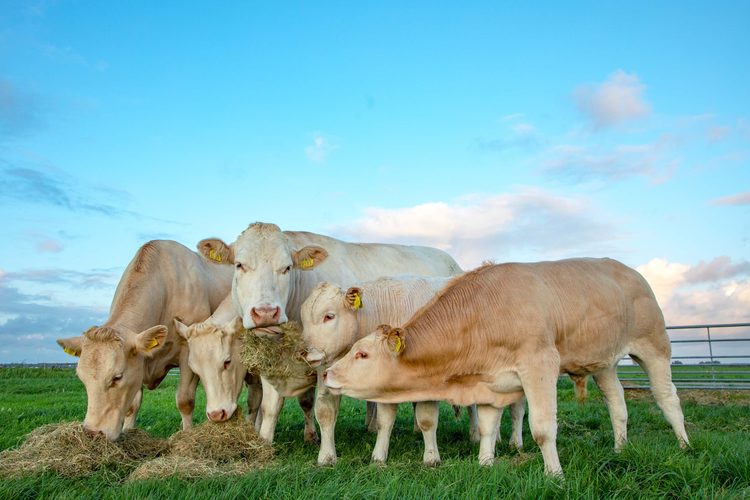
Blonde d'Aquitaine was developed in south-western France, a region known for centuries for its light-coated cattle. The modern breed was created in 1962 by merging the blond cattle of Garonne, Quercy and the Pyrenees, and has since spread to many countries.
The breed belongs to the intensive beef breeds: the body is very long, the muscles are especially well developed on the hindquarters, back and chest, and the bone structure is relatively fine. The colour varies from light wheaten to reddish brown. Calves are born long and slender, which makes calving easy for such a large body weight.
Blonde d'Aquitaine is valued for its high dressing percentage and high proportion of lean meat – the meat is lean and fine-fibred. The breed adapts to different climatic conditions and also copes on pasture forage.
The first Blonde d'Aquitaine bull and two heifers were brought to Estonia from Sweden in 2002.
Key facts
- Origin: France, Aquitaine
- Body weight: cows 700–1000 kg, bulls 1100–1500 kg
- Colour: light wheaten to reddish brown
- Strengths: very good muscling, high dressing percentage, relatively easy calving
- In Estonia since: 2002